The Eiffel Tower: An Iron Lesson
How a temporary exhibition gate became the most visited monument on earth.
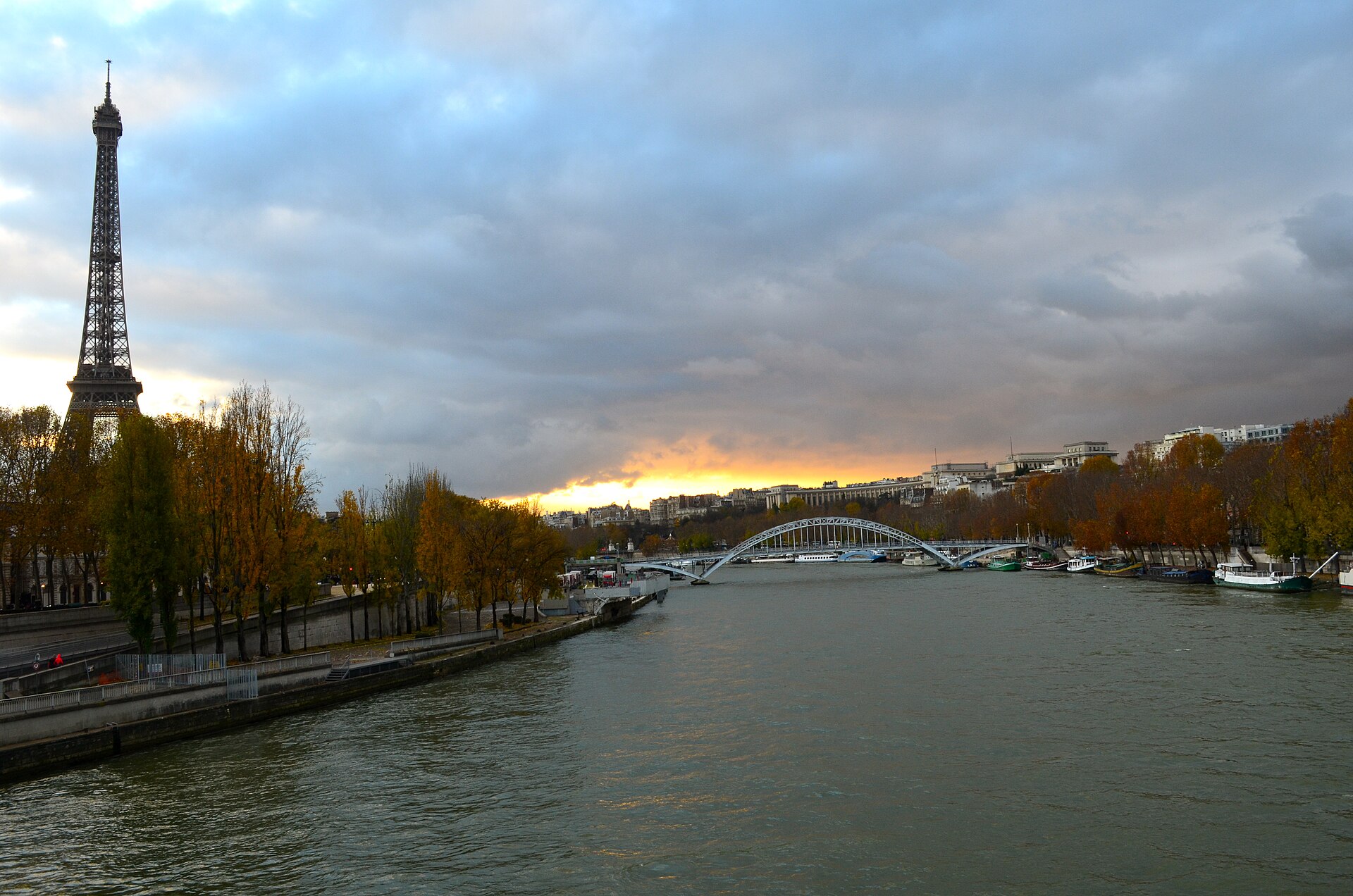
The tower on the Champ de Mars was never meant to stay. It was built as the centrepiece — and the entrance arch — of the Exposition Universelle of 1889, a world's fair marking the centenary of the French Revolution. The concession granted it twenty years; after that, Paris was free to pull it down. That it survived is a story less about beauty than about usefulness — and it is worth telling properly.
Whose idea it actually was
Gustave Eiffel did not sketch the tower himself. The first drawing came in 1884 from two engineers in his company, Maurice Koechlin and Émile Nouguier, who imagined a great lattice pylon built like a bridge pier carried into the sky. Eiffel was initially lukewarm; the architect Stephen Sauvestre then added the decorative arches at the base and the masonry pedestals that gave the design its recognisable silhouette. Eiffel bought the patent rights from his engineers, lent the project his name and his factory, and defended it in public for the rest of his life.
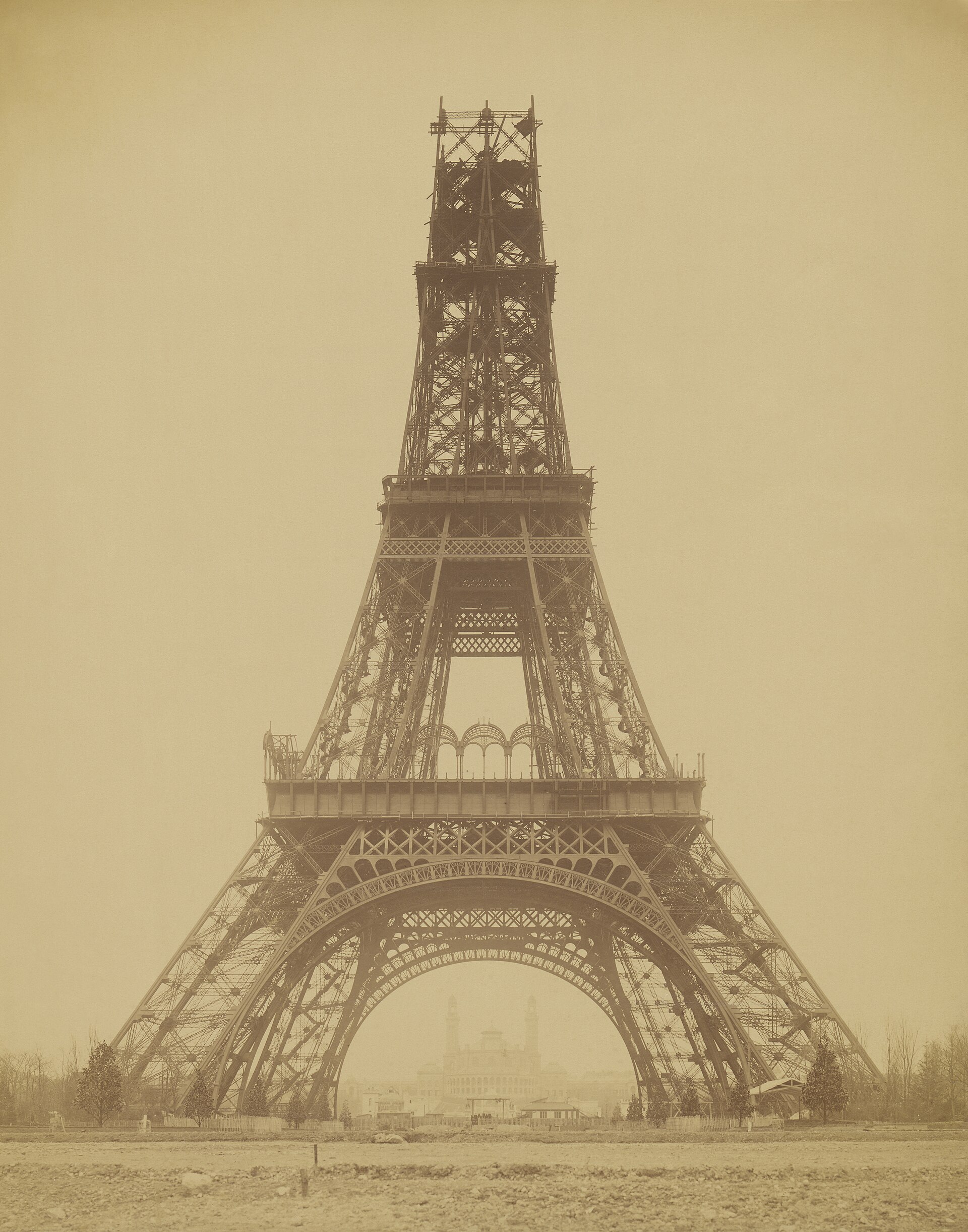
A national competition followed in 1886. Eiffel's proposal won largely because it arrived with the engineering already done: every girder had been calculated, every joint drawn. Construction began in January 1887, and the tower was assembled in just over two years — a pace possible only because the parts arrived from the factory pre-drilled to a tolerance of a tenth of a millimetre.
The scandal of the iron
Not everyone applauded. In February 1887 a group of prominent artists — including the writers Guy de Maupassant and Alexandre Dumas fils — published an open letter in Le Temps protesting the "useless and monstrous" tower that would dishonour Paris. Maupassant is said to have lunched in the tower's restaurant afterward because it was the one place in the city where he could not see it. The story is probably polished by repetition, but the outrage was real: Parisians of the 1880s experienced the tower the way a later generation would experience a skyscraper in a cathedral's square.
Engineering notes
The tower's shape is not ornamental. Koechlin's original drawing described a structure whose curve follows the mathematics of wind resistance: the lattice is flared at the base and tapers steeply so that wind pressure is converted into compressive force along the iron rather than overturning the structure. Eiffel himself boasted that the wind, not the height, had dictated the profile.
The metal behaves like a living instrument. In a strong wind the summit can drift by several centimetres; on a hot afternoon the sun side of the iron expands, and the top can lean away from the light by as much as eighteen centimetres. In midsummer heat the whole structure stands taller than in winter — thermal expansion adds roughly fifteen centimetres to its height. The tower also needs a new coat about every seven years: some sixty tonnes of paint, applied by hand, in a graded bronze tone darker at the base than at the top.
The names in the frieze
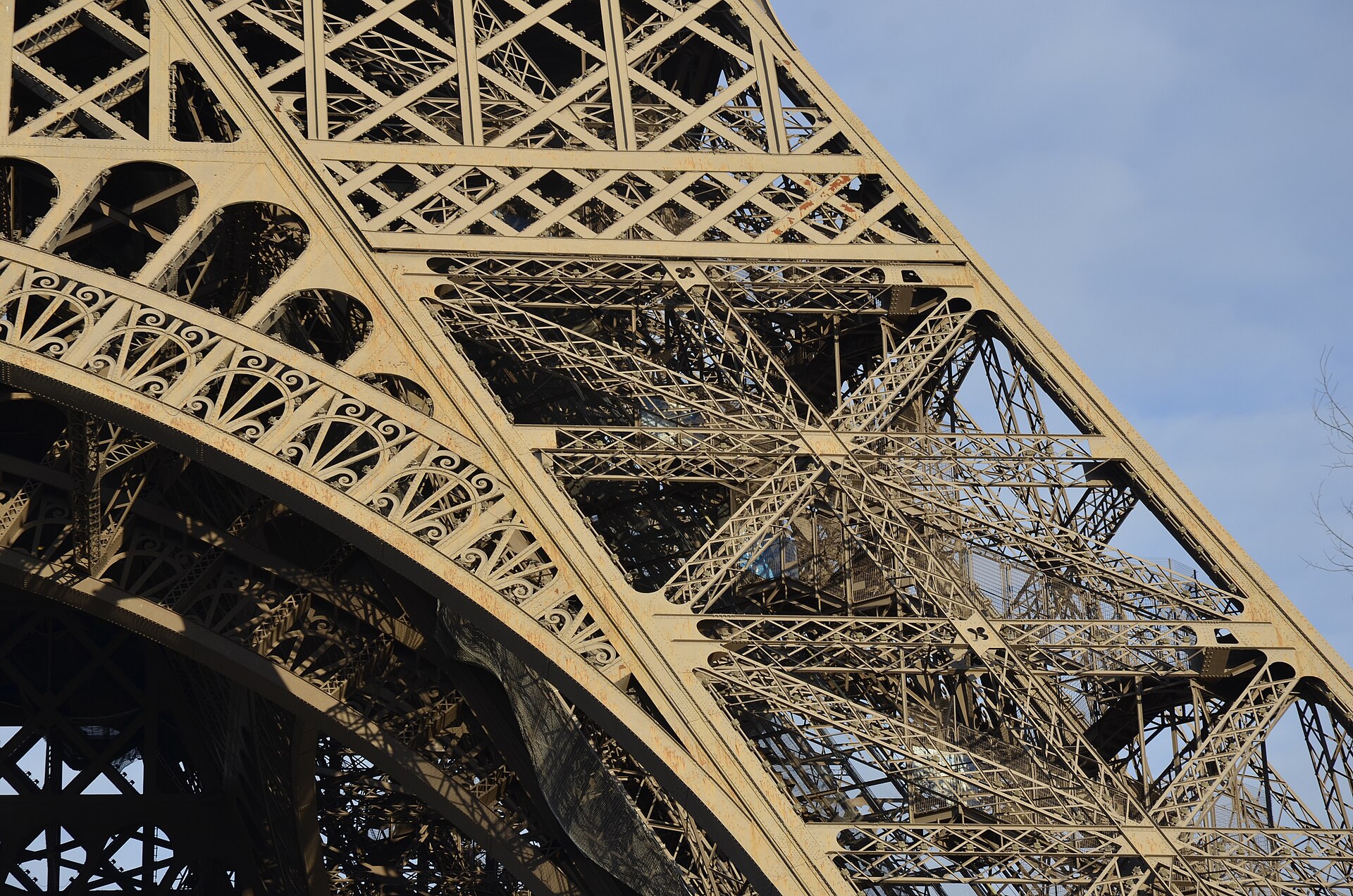
Look closely at the first floor and the iron carries a text: seventy-two names of French scientists, engineers and mathematicians — Lagrange, Laplace, Ampère, Fourier, Lavoisier among them — engraved in metre-high letters just above the arches. It was Eiffel's answer to the artists' letter: his tower was not the enemy of French genius but its monument. The names were painted over early in the twentieth century and restored only in the 1980s.
Why it was never demolished
The twenty-year concession expired in 1909, and by then Paris had — reluctantly — grown used to the silhouette. But the decisive argument was practical: the tower had become the city's highest telegraph pole. Military wireless experiments were conducted from it; radio telegraphy equipment was installed in the Champ de Mars galleries; in 1914 its antennas helped intercept enemy transmissions during the First Battle of the Marne. A scrap dealer cannot compete with a radio mast.
The antennas remain. The tower still carries broadcast equipment on its summit, which is why its official height has crept upward over the decades: three hundred metres at opening, about three hundred and thirty today. For forty-one years it was the tallest structure in the world, until the Chrysler Building passed it in 1930. It has long since lost the record; it has never lost the queue beneath it.