What There Is to Do at the Tower
A floor-by-floor guide to the monument, and to the neighbourhood that frames it.
The Eiffel Tower is usually photographed and rarely read. Yet each of its levels works differently — the esplanade is a public square, the first floor a small museum, the second a belvedere, the summit a salon in the sky. Understanding what is where turns a queue into an itinerary. None of the experiences below requires buying anything; this guide simply describes what exists and why.
Ground level: the esplanade
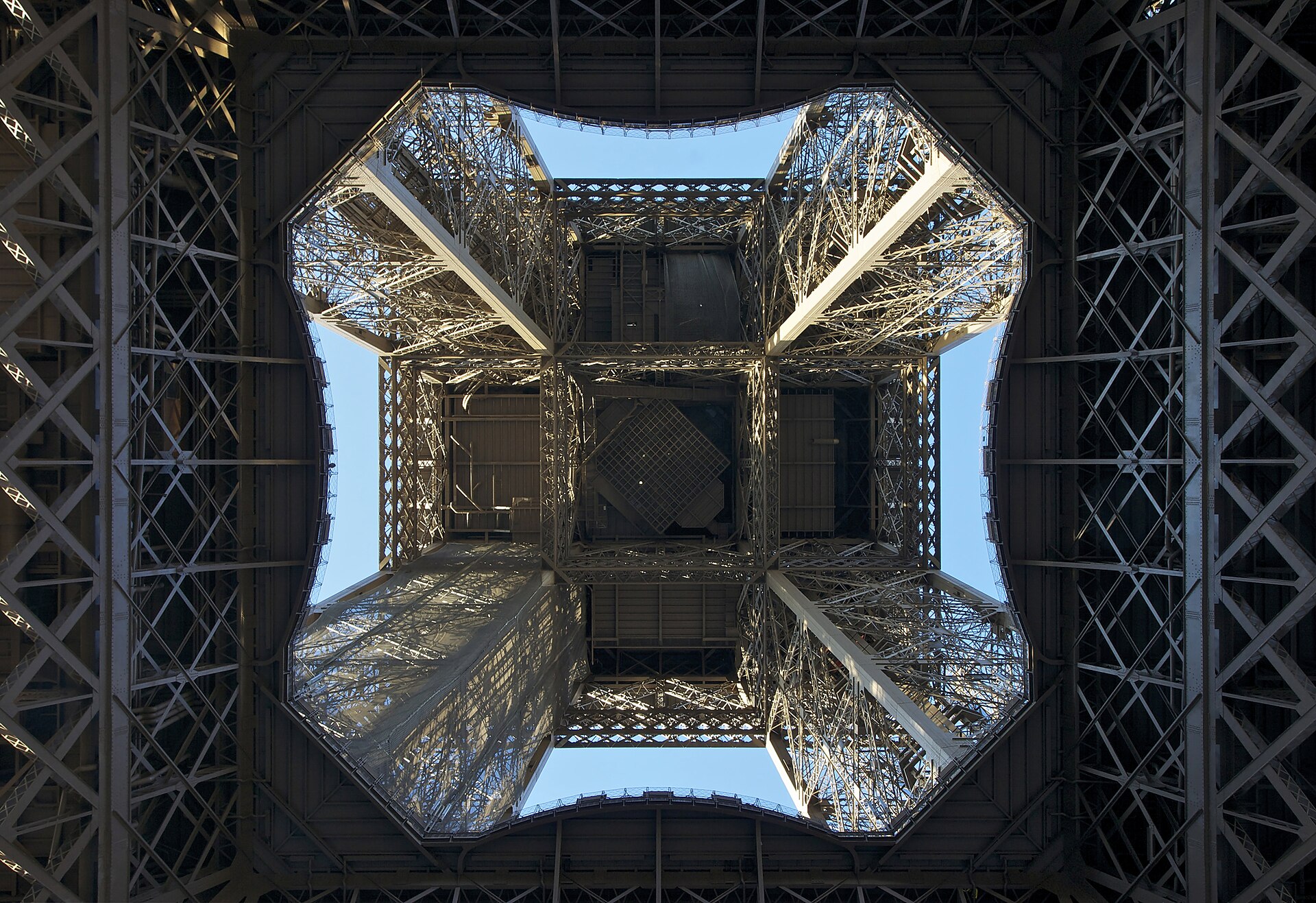
Beneath the four pillars runs a free, open-air gallery most visitors hurry through. The bronze bust of Gustave Eiffel by Bourdelle stands at the north pillar, and the pillars themselves are worth a slow look: each foot of the tower rests on a hydraulic mechanism that allowed millimetre-precise adjustment during construction. Information panels explain how the foundations were sunk beside the river — a more interesting story than the queues suggest.
First floor: the museum level
At fifty-seven metres, the first floor is the tower's widest platform and its quietest. Its signature experience is the glass floor — a transparent section of paving through which visitors look straight down onto the esplanade crowds reduced to an ant-farm. Around it run exhibition spaces that rotate displays on the tower's history: old photographs of the construction, the original hydraulic lift machinery, and a section of the spiral staircase that once led to Eiffel's private office.
This level also hosts the tower's sit-down brasserie, seasonal installations — in past winters a small skating rink was laid directly over the glass floor — and a projection theatre that replays the tower's building in a loop. For those who climbed the stairs rather than rode the lift, it is where the legs get their answer: six hundred and seventy-four steps end here, or rather continue upward.
Second floor: the belvedere
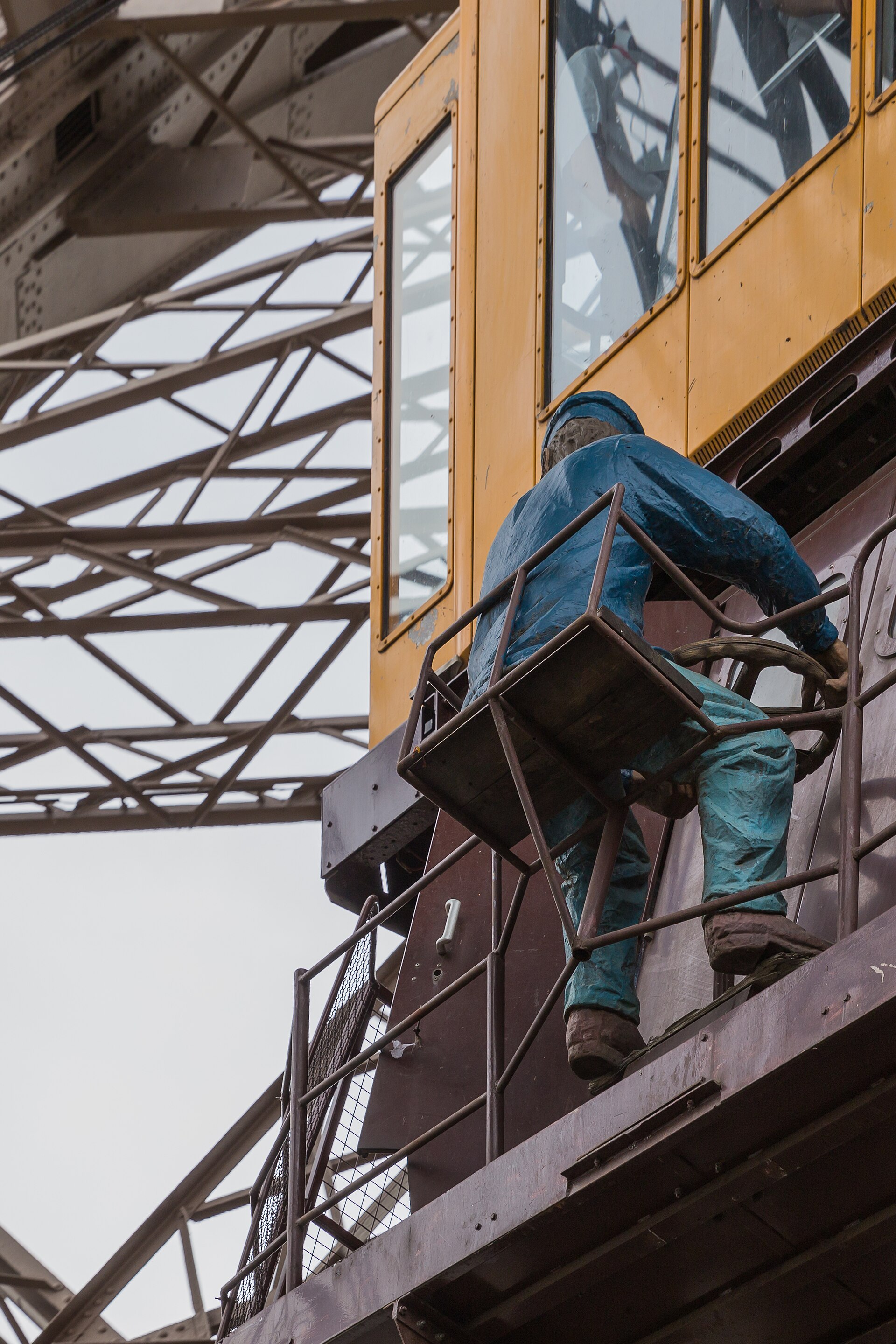
At one hundred and fifteen metres the platform narrows and the view takes over. This is the classic observation deck: telescopes and orientation tables along the parapet identify every landmark in the panorama — Montmartre to the north, Montparnasse to the south, the curve of the Seine carrying the Louvre and Notre-Dame in between. It is also home to the tower's gastronomic restaurant, reached by its own private lift, and a macaron counter that has become a minor institution of its own.
The summit: the salon
A second lift carries visitors from the second floor to the top at two hundred and seventy-six metres. The summit is small and deliberately theatrical: a reconstruction of Gustave Eiffel's office, complete with wax figures of Eiffel and his daughter receiving Thomas Edison — who did visit, in 1889, and signed the guest book. A champagne counter serves by the glass, and an orientation diagram marks the cities visible — or imagined — beyond the horizon.
The hourly glitter
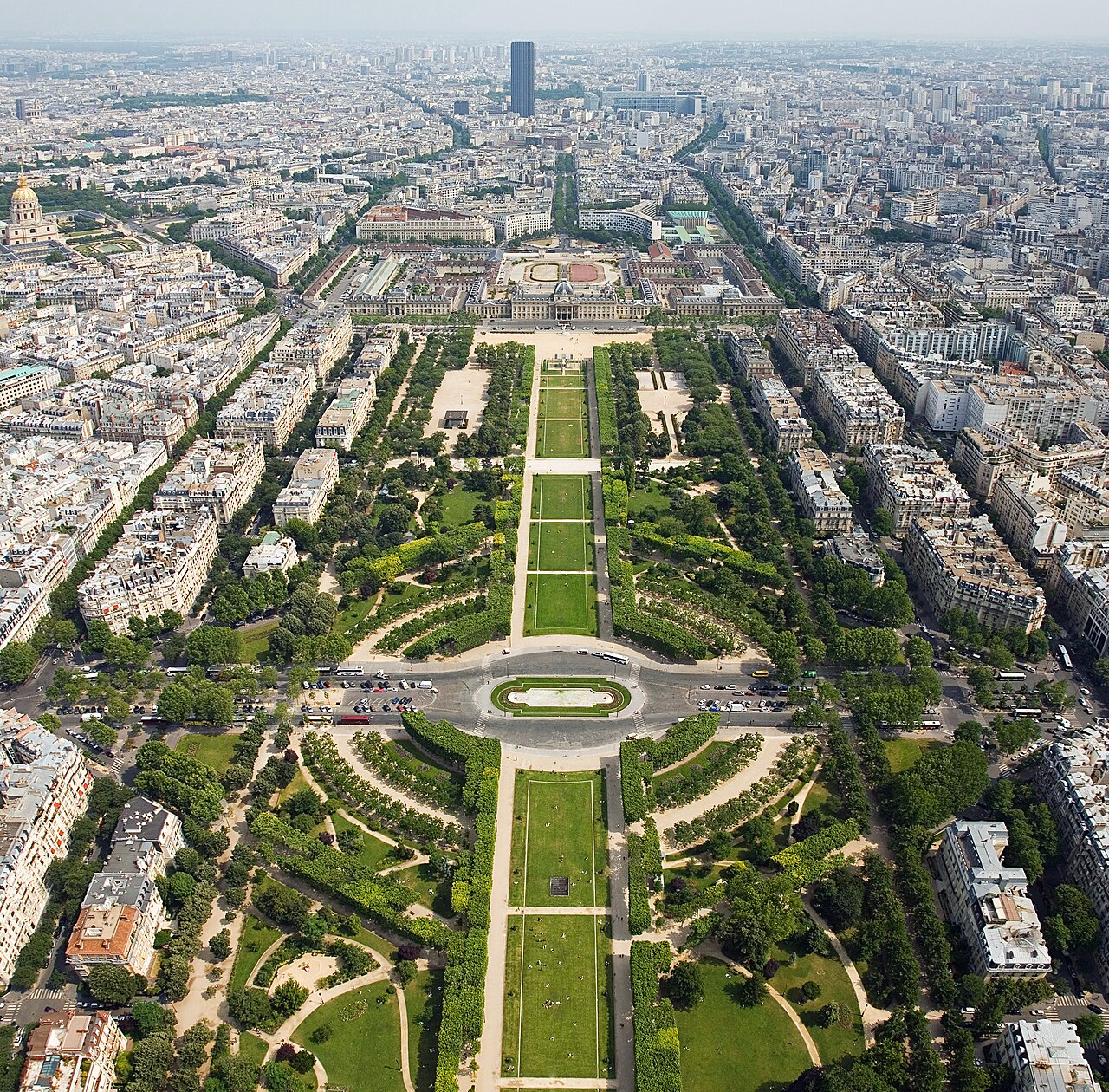
The tower's best-known performance costs nothing and requires no ticket. Since the year 2000, twenty thousand sodium bulbs fitted to the lattice have sparkled for five minutes every hour on the hour after dark — a golden twinkle layered over the monument's regular floodlighting, with a rotating beacon at the summit. It was installed as a temporary millennium decoration and kept because the city refused to give it up. The view is free from anywhere in Paris; the best seat is the Champ de Mars lawn.
Around the tower
- Champ de Mars. The long lawn running southeast to the École Militaire — the city's favourite picnic ground, and the classic angle for the full tower portrait.
- The Wall for Peace. A glass-and-steel colonnade at the garden's far end, erected in 2000, carrying the word peace in dozens of languages.
- Trocadéro esplanade. Across the river, the elevated terrace gives the postcard view — best at dawn, before the crowds.
- Seine cruises. The bateaux-mouches and smaller boat companies board a short walk west along the quays; an hour on the river reorders every landmark the tower has just shown from above.
- Rue Cler. A market street a few minutes east, where the neighbourhood's food shops explain Parisian eating better than any museum.
Practical notes, without the brochure
- The stairs and the lifts are different experiences: stairs to the second floor are usually quicker to enter and quieter at the top of each flight.
- Timed-entry tickets, booked days ahead, change the visit more than any hotel recommendation ever will.
- Everyone passes through the same security screening under the pillars — arrive a little before the slot, not at it.
- Sunset is the most contested hour of the day: whoever wants the summit at dusk books it first.
- The nearest Métro stations are Bir-Hakeim (line 6) and Trocadéro (lines 6 and 9); the RER C stops at Champ de Mars–Tour Eiffel.